

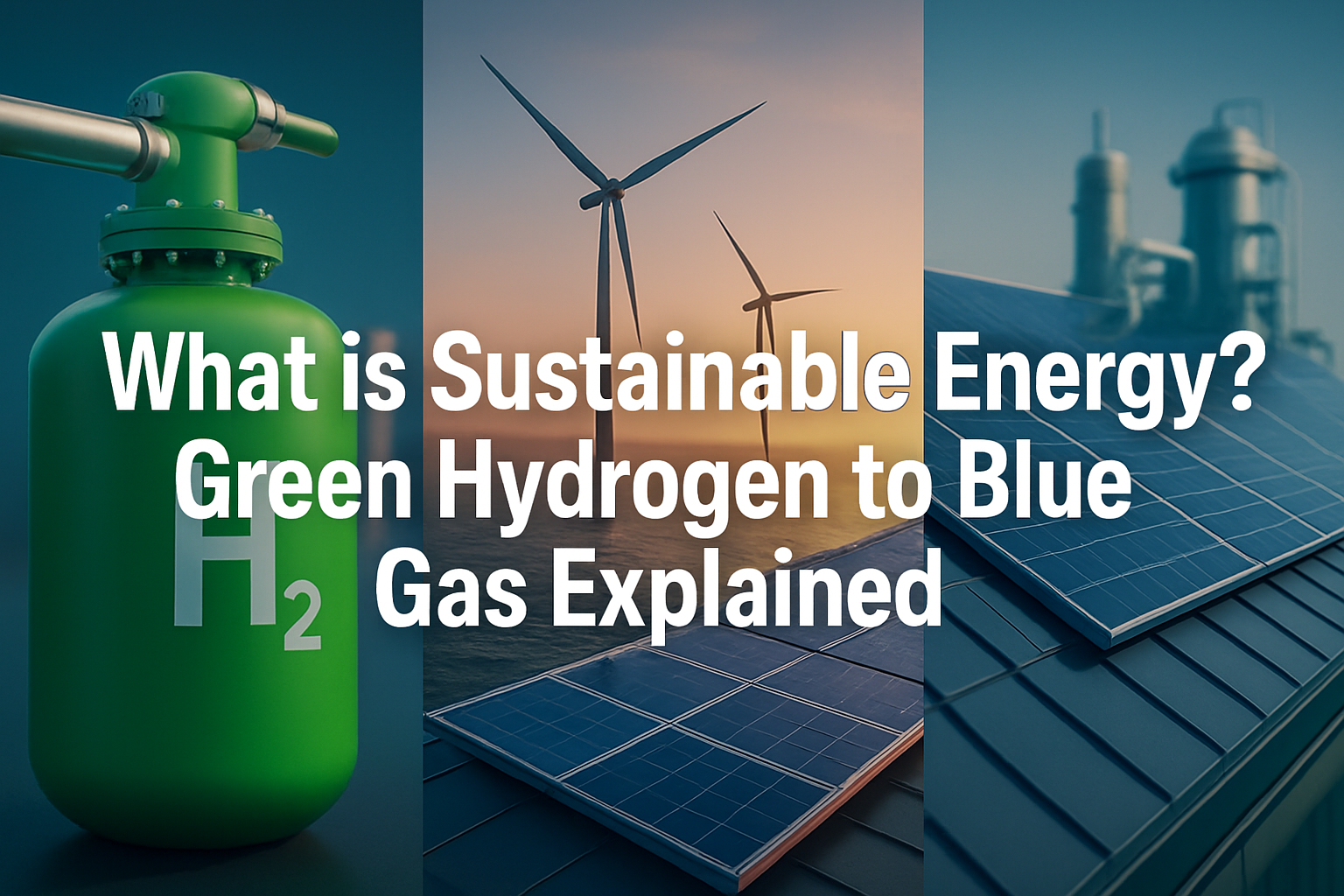
The global energy landscape is undergoing a monumental shift, driven by an urgent need to combat climate change and ensure a stable future for generations to come. In 2025, the conversation around what is sustainable energy is more critical and nuanced than ever, extending beyond traditional renewables to encompass innovative solutions like green hydrogen and blue gas. This comprehensive guide will explore the multifaceted world of sustainable energy, shedding light on its core principles, key technologies, and the vital role these emerging energy carriers play in charting a decarbonized path forward.
Key Takeaways
- Sustainable energy is about meeting current energy needs without compromising future generations’ ability to do the same, focusing on low-carbon or zero-carbon sources.
- Renewable energy sources like solar, wind, and hydro are the bedrock of sustainable energy, offering inexhaustible power with minimal environmental impact.
- Green Hydrogen is produced via electrolysis powered by 100% renewable electricity, making it a truly zero-emission energy carrier with vast potential.
- Blue Gas (or Blue Hydrogen) utilizes natural gas with integrated Carbon Capture, Utilization, and Storage (CCUS) to significantly reduce emissions, serving as a lower-carbon bridge solution.
- The interplay between direct renewable electricity, green hydrogen, and blue gas is crucial for a comprehensive energy transition, addressing diverse sector needs.
Understanding the Foundation: What is Sustainable Energy?
At its core, what is sustainable energy revolves around the principle of sustainability: meeting present energy demands without depleting natural resources or harming the environment for future generations. This concept broadly encompasses two main pillars:
- Renewable Energy Sources: These are natural resources that replenish themselves constantly, making them inexhaustible over human timescales.
- Energy Efficiency and Conservation: This involves reducing the amount of energy required to provide products and services, thereby minimizing waste.
The transition to sustainable energy is paramount for tackling climate change, reducing air pollution, enhancing energy security, and fostering economic growth. It’s a fundamental step towards achieving global climate targets and ensuring a livable planet for everyone.
The Pillars of Renewable Energy
The primary drivers of sustainable energy today are well-established renewable sources:
- Solar Power ☀️: Harnessing sunlight using photovoltaic (PV) panels or concentrated solar power (CSP) systems to generate electricity. Its versatility allows for large-scale solar farms or rooftop installations.
- Wind Power 🌬️: Utilizing wind turbines to convert wind energy into electricity. This is a highly efficient and rapidly expanding source, particularly with offshore wind farms.
- Hydropower 🌊: Generating electricity from the kinetic energy of flowing water, typically through dams. It’s a reliable base-load power source but can have significant ecological impacts depending on the scale.
- Geothermal Energy 🔥: Tapping into the Earth’s internal heat to produce steam for electricity generation or direct heating. This is a consistent and low-emission source.
- Biomass Energy 🌱: Derived from organic matter (plants, animal waste) to produce heat, electricity, or biofuels. While renewable, its sustainability depends heavily on sourcing and processing methods.
These sources form the backbone of a low-carbon energy system, steadily replacing fossil fuels and driving down greenhouse gas emissions.
The Role of Gaseous Fuels in Sustainable Energy
While direct electricity generation from renewables is crucial, some sectors (like heavy industry, long-haul transport, and seasonal energy storage) require high-density, flexible energy carriers. This is where hydrogen and other gaseous fuels, specifically green hydrogen and blue gas, enter the conversation about what is sustainable energy.
Blue Gas: A Bridge to a Cleaner Future
Blue gas, or more accurately, blue hydrogen, represents a strategic approach to decarbonization, particularly for economies with abundant natural gas reserves. It addresses the need for a scalable, lower-carbon energy source while the infrastructure for truly green alternatives fully matures.
How Blue Gas is Produced
Blue gas production begins with natural gas (methane, CH4). The primary process is steam methane reforming (SMR) or autothermal reforming (ATR):
- Reforming: Natural gas reacts with steam or oxygen at high temperatures to produce hydrogen and carbon dioxide (CO2).
- Carbon Capture, Utilization, and Storage (CCUS): Crucially, the CO2 generated during the reforming process is captured before it can be released into the atmosphere.
- Capture: Technologies like solvent absorption or membrane separation isolate the CO2.
- Utilization: The captured CO2 can be used in various industrial processes, such as enhanced oil recovery, concrete production, or synthesizing other chemicals.
- Storage: Most commonly, the CO2 is compressed and injected deep underground into geological formations, like saline aquifers or depleted oil and gas reservoirs, where it is permanently sequestered.
The integration of CCUS is what differentiates blue gas from conventional “grey” hydrogen, which produces significant CO2 emissions. While not entirely carbon-free due to potential fugitive methane emissions from natural gas extraction and energy consumed in CCUS, blue gas offers a substantial reduction in carbon footprint compared to traditional fossil fuel use.
Related Posts:
- How Smart Home Tech is Shaping the Future of Living in 2025

- What Is Sensata Technologies Sensors and Controls…

- What Is Infineon Technologies Semiconductor Solutions Leader

- How Technology Affects Marketing Digital Strategies…

- What Is Information Science and Technology Data and…

- Is OLED the Best TV Technology Picture Quality Compared

Advantages and Challenges of Blue Gas
Advantages:
- Scalability: Can be rapidly scaled up using existing natural gas infrastructure.
- Lower Emissions: Significantly reduces greenhouse gas emissions compared to grey hydrogen.
- Energy Security: Utilizes readily available natural gas resources.
- Bridge Technology: Provides a pathway for decarbonizing hard-to-abate sectors while green hydrogen production ramps up.
Challenges:
- Reliance on Fossil Fuels: Still dependent on natural gas, meaning upstream methane leaks remain a concern.
- CCUS Efficiency and Cost: The effectiveness and cost of carbon capture and storage technologies vary and can be energy-intensive.
- Public Perception: May face scrutiny from environmental groups due to its fossil fuel origin.
Green Hydrogen: The Pinnacle of Sustainable Energy
When discussing what is sustainable energy, green hydrogen stands out as the ultimate goal for a truly zero-emission energy carrier. Its production method entirely bypasses fossil fuels, making it an environmentally pristine option.
The Green Hydrogen Production Process
Green hydrogen is produced through electrolysis of water:
- Renewable Electricity Source: Electricity is generated from 100% renewable sources, such as solar panels or wind turbines.
- Electrolyzer: This renewable electricity is fed into an electrolyzer, a device that uses electrical energy to split water (H2O) into its constituent elements: hydrogen (H2) and oxygen (O2).
- Zero Emissions: The only by-products of this process are hydrogen and oxygen – no greenhouse gases are released into the atmosphere.
The ability to produce hydrogen without any carbon emissions at the point of production is what makes green hydrogen a game-changer for fully decarbonizing industries and sectors that are difficult to electrify directly.
Applications of Green Hydrogen
Green hydrogen holds immense potential across various sectors:
- Industrial Feedstock: Replacing grey hydrogen in ammonia production (for fertilizers), methanol synthesis, and steel manufacturing.
- Transportation: Fueling heavy-duty trucks, trains, ships, and even aviation through fuel cells or synthetic fuels.
- Power Generation & Grid Stability: Used in gas turbines for electricity generation or as a long-duration energy storage solution to balance intermittent renewables.
- Heating: Blending with natural gas for domestic and industrial heating, or eventually, 100% hydrogen heating networks.
Advantages and Challenges of Green Hydrogen
Advantages:
- Zero Emissions: Truly carbon-free production when using renewable electricity.
- Versatile Energy Carrier: Can be stored, transported, and converted into electricity or heat.
- Decouples from Fossil Fuels: Breaks the reliance on finite fossil resources.
- Scalable Potential: As renewable energy costs fall, green hydrogen production becomes more economically viable.
Challenges:
- High Production Cost: Currently more expensive than grey or blue hydrogen due to electrolyzer costs and renewable electricity pricing.
- Infrastructure: Requires significant investment in new production, storage, and distribution infrastructure.
- Energy Efficiency: The electrolysis process and subsequent conversion can lead to energy losses.
The Spectrum of Hydrogen Colors and Their Significance
To fully appreciate what is sustainable energy in the context of hydrogen, it’s helpful to understand the “color” spectrum used to categorize hydrogen based on its production method and carbon footprint.
| Hydrogen Type | Production Method | Carbon Footprint | Role in Sustainable Energy |
|---|---|---|---|
| Green Hydrogen | Electrolysis of water using 100% renewable electricity | Zero emissions | The ultimate sustainable goal; fully decarbonized. |
| Blue Hydrogen | Steam Methane Reforming (SMR) or ATR with CCUS | Low emissions (captured CO2) | Bridge solution; decarbonizes natural gas-based hydrogen. |
| Grey Hydrogen | Steam Methane Reforming (SMR) or ATR without CCUS | High emissions (CO2 released to atmosphere) | Current dominant production; unsustainable. |
| Pink Hydrogen | Electrolysis using nuclear power | Near-zero emissions (nuclear waste remains a concern) | Low-carbon, non-renewable source. |
| Turquoise Hydrogen | Methane pyrolysis (natural gas split into hydrogen and solid carbon) | Low emissions (solid carbon by-product; no CO2) | Emerging technology; potential for valuable carbon output. |
The move towards green and blue hydrogen is a clear indicator of the global commitment to sustainable energy practices, aiming to shift away from the highly polluting grey hydrogen that dominates today’s market.
Integrating Sustainable Energy Solutions: A Holistic Approach
The journey towards a fully sustainable energy system in 2025 and beyond will not rely on a single solution but rather a mosaic of technologies and strategies.
Smart Grids and Energy Storage
Integrating diverse sustainable energy sources requires advanced infrastructure. Smart grids use digital technology to monitor, manage, and optimize energy flow, making the grid more efficient, reliable, and capable of handling intermittent renewable inputs. Energy storage solutions, ranging from batteries (short-term) to hydrogen or pumped-hydro (long-term), are vital for balancing supply and demand, ensuring grid stability when the sun isn’t shining or the wind isn’t blowing.
Policy and Investment
Government policies, incentives, and international collaborations are crucial accelerators for sustainable energy adoption. Carbon pricing, renewable energy mandates, research and development funding, and cross-border energy projects all play a significant role. Private sector investment, driven by both economic opportunity and ESG (Environmental, Social, and Governance) commitments, is equally important for scaling up new technologies and infrastructure.
The Consumer’s Role in What is Sustainable Energy
Ultimately, the transition depends on collective action. Consumers can contribute by:
- Reducing Energy Consumption: Implementing energy-efficient practices at home and work.
- Adopting Renewable Technologies: Installing rooftop solar, opting for electric vehicles.
- Choosing Green Energy Providers: Switching to utilities that source power from renewables.
- Advocating for Change: Supporting policies and initiatives that promote sustainable energy.
The combined efforts of individuals, industries, and governments are essential to harness the full potential of sustainable energy, from robust renewable grids to the promise of green hydrogen and the pragmatic bridge of blue gas.
Conclusion
The question of what is sustainable energy is being answered by a rapidly evolving suite of technologies and strategies. In 2025, we are witnessing a concerted global effort to decarbonize our energy systems, with renewable electricity leading the charge. Complementary solutions like green hydrogen offer the tantalizing prospect of zero-emission fuel for hard-to-abate sectors, while blue gas provides a crucial lower-carbon bridge, leveraging existing infrastructure with advanced carbon capture technologies.
The path to a fully sustainable energy future is complex, requiring continuous innovation, strategic investment, robust policy frameworks, and active participation from every segment of society. By embracing this diverse portfolio of sustainable energy solutions, we can build a resilient, clean, and prosperous world for generations to come. The future is energy-efficient, renewable, and increasingly powered by the transformative potential of hydrogen.
Actionable Next Steps:
- Stay Informed: Continue learning about emerging sustainable energy technologies and their impacts.
- Support Policy: Engage with local and national political processes to advocate for sustainable energy policies.
- Reduce & Conserve: Implement energy-saving measures in your daily life.
- Consider Green Choices: Explore options for renewable energy at home (solar, green electricity tariffs) and in transportation (EVs, public transport).
- Invest Responsibly: Support companies and funds committed to sustainable energy development.
Frequently Asked Questions about Sustainable Energy
Sustainable energy refers to energy sources and practices that meet the needs of the present without compromising the ability of future generations to meet their own needs. It encompasses renewable energy sources like solar, wind, hydro, and geothermal, along with technologies and methods that significantly reduce environmental impact, such as carbon capture and efficient energy use. The goal is to transition away from fossil fuels to a low-carbon or zero-carbon energy system.
Green Hydrogen is produced by splitting water into hydrogen and oxygen using electrolysis, powered exclusively by renewable energy sources like solar and wind. It results in zero greenhouse gas emissions during production. Blue Gas (often referred to as blue hydrogen when discussing hydrogen) is produced from natural gas through a process called steam methane reforming, where the CO2 generated is captured and stored permanently (Carbon Capture, Utilization, and Storage – CCUS). While it still relies on a fossil fuel, the carbon emissions are drastically reduced, making it a lower-carbon alternative compared to conventional natural gas.
Sustainable energy is crucial for 2025 and future years because it directly addresses climate change by reducing greenhouse gas emissions. It also enhances energy security by decreasing reliance on finite fossil fuels and unstable global markets. Furthermore, investing in sustainable energy drives economic growth, creates new jobs, and improves public health by reducing air pollution. It’s a foundational element for achieving global sustainability goals.
Individuals can contribute by adopting energy-efficient practices at home and work (e.g., using LED lighting, insulating homes), choosing renewable energy providers if available, opting for public transport or electric vehicles, reducing consumption, and supporting policies that promote sustainable energy development. Educating oneself and others about the benefits of sustainable energy is also a powerful contribution.
How to Support the Transition to Sustainable Energy
Steps to Promote Sustainable Energy in Your Community
-
Educate Yourself and OthersStart by understanding the various forms of sustainable energy, their benefits, and challenges. Share this knowledge with friends, family, and colleagues. Knowledge is the first step towards advocacy.
-
Advocate for Renewable Energy PoliciesContact your local representatives and elected officials to express your support for policies that promote renewable energy development, energy efficiency standards, and carbon reduction goals. Attend local community meetings to voice your opinions.
-
Invest in Energy-Efficient SolutionsUpgrade your home or business with energy-efficient appliances, improved insulation, and smart thermostats. These actions reduce energy consumption and save money, while lowering your carbon footprint.
-
Consider Personal Sustainable Energy AdoptionIf feasible, explore installing solar panels on your property, switching to an electric vehicle, or opting for a green energy tariff from your electricity provider. Even small changes accumulate.
-
Support Sustainable Businesses and InnovationsChoose products and services from companies that prioritize sustainability and invest in renewable energy. Look for businesses that are actively working to reduce their environmental impact. Stay informed about new technologies like quantum computing for energy optimization.
Key Sustainable Energy Terms
- Green Hydrogen
- Hydrogen produced by splitting water through electrolysis, with the electricity generated solely from renewable energy sources like solar or wind. It produces no greenhouse gas emissions during its production.
- Blue Gas (Blue Hydrogen)
- Hydrogen produced from natural gas (a fossil fuel), where the carbon dioxide emissions generated during the production process are captured and stored (Carbon Capture, Utilization, and Storage – CCUS), significantly reducing its carbon footprint compared to traditional methods.
- Renewable Energy
- Energy derived from natural processes that replenish themselves faster than they are depleted. Examples include solar, wind, hydro, geothermal, and biomass energy.
- Carbon Capture, Utilization, and Storage (CCUS)
- A set of technologies that capture carbon dioxide (CO2) emissions from industrial processes or power generation, preventing them from entering the atmosphere. The captured CO2 can then be reused or stored deep underground.
- Electrolysis
- A process that uses electricity to split water (H2O) into hydrogen (H2) and oxygen (O2). When powered by renewable electricity, this is the core method for producing green hydrogen.