
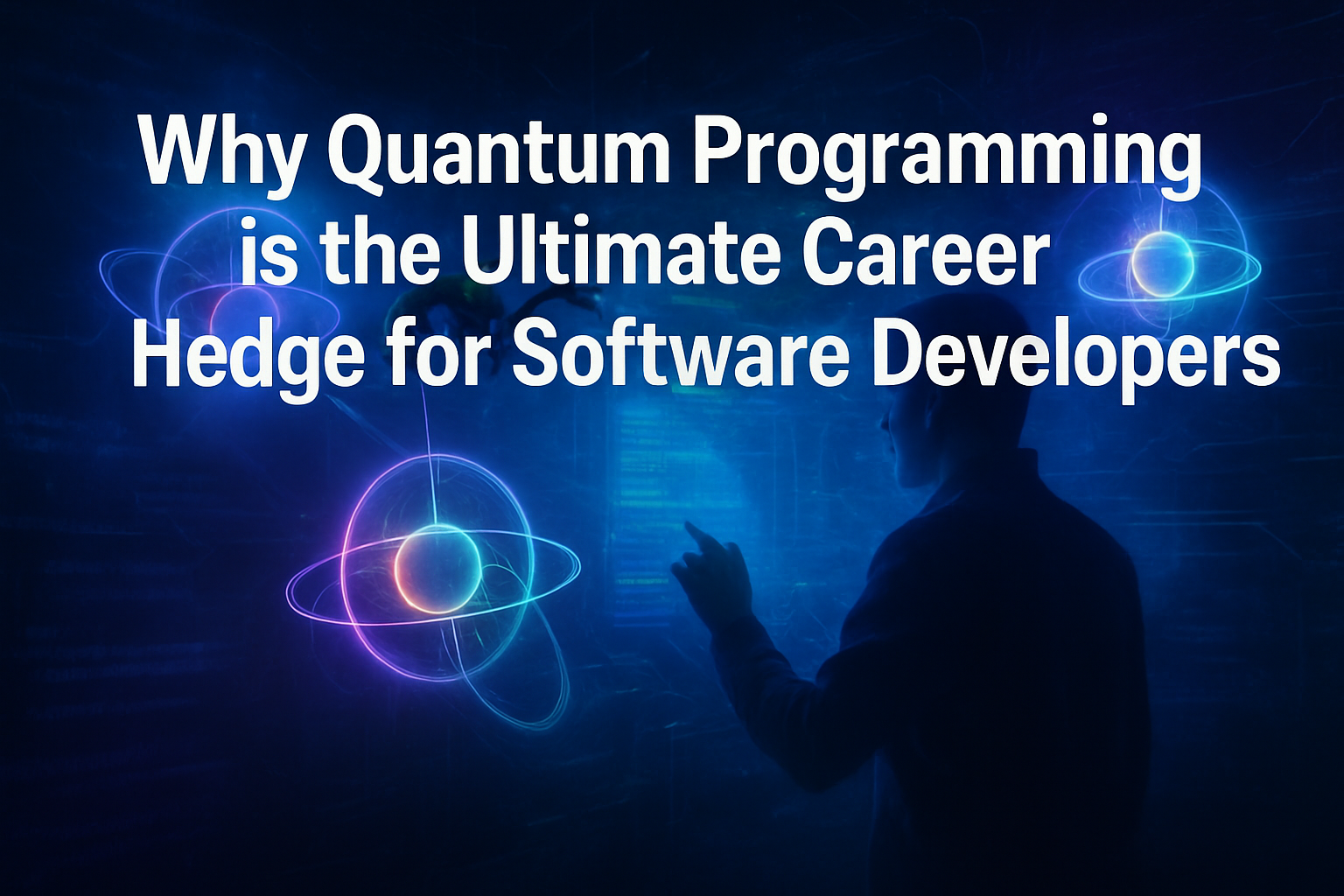
The digital landscape is constantly evolving, presenting both challenges and unprecedented opportunities for software developers. As 2025 unfolds, one emerging field stands out as a formidable career hedge: quantum programming. For forward-thinking software developers, understanding the quantum programming career benefits software developers can unlock a future-proof skillset, offering unparalleled job security and innovation potential in a rapidly changing technological world. This comprehensive guide will explore why diving into quantum computing now is not just a trend, but a strategic imperative for long-term career success.
Key Takeaways
- Future-Proof Your Career: Quantum programming offers a hedge against automation and an entry into a highly specialized, in-demand field.
- High Demand, Low Supply: The scarcity of quantum experts means early adopters will command premium salaries and opportunities.
- Pioneer Innovative Solutions: Work on groundbreaking problems in medicine, finance, and materials science that classical computers cannot solve.
- Leverage Existing Skills: Your current programming logic and problem-solving abilities are transferable, easing the transition into quantum development.
- Access Cutting-Edge Tools: Explore a growing ecosystem of free, open-source quantum development kits and platforms.
The Quantum Revolution: An Inevitable Shift
For decades, classical computing has driven technological progress, from the internet to artificial intelligence. However, as computational demands grow and the physical limits of Moore’s Law become apparent, a new paradigm is emerging: quantum computing. Unlike classical computers that store information as bits (0s or 1s), quantum computers use qubits, which can exist in multiple states simultaneously (superposition) and be linked together (entanglement). This fundamental difference allows them to tackle problems that are intractable for even the most powerful supercomputers.
The transition to quantum computing won’t happen overnight, but its impact is already being felt in research labs and early commercial applications. Industries like pharmaceuticals, finance, logistics, and cybersecurity are investing heavily in quantum research, anticipating its disruptive potential. For software developers, this represents not just a new niche, but an entirely new frontier of computation, promising a vast array of challenges and rewards.
Unpacking the Quantum Programming Career Benefits for Software Developers
The advantages of specializing in quantum programming are multi-faceted, ranging from immediate career opportunities to long-term professional growth.
Securing Your Future: A Hedge Against Automation and Market Shifts
In an era where AI and automation are reshaping various industries, highly specialized skills remain incredibly valuable. Quantum programming is, by its very nature, a complex and evolving field that requires deep analytical thinking and creative problem-solving – attributes less susceptible to automation. By investing in quantum skills in 2025, software developers are essentially future-proofing their careers, ensuring they remain at the forefront of technological innovation rather than being sidelined by it.
Moreover, the quantum computing market is projected to grow substantially. Early adoption means positioning oneself as an expert in a field with long-term upward trajectory, shielding against potential market fluctuations in more saturated areas of software development.
High Demand and Specialized Expertise: The Scarcity Premium
Currently, the number of skilled quantum programmers globally is relatively small compared to the demand. This imbalance creates a significant “scarcity premium” for those with expertise in quantum algorithms and programming languages. Companies are actively seeking talent to build and optimize quantum applications, conduct research, and integrate quantum solutions into existing systems.
For software developers, this translates into:
- Higher earning potential: Specialized skills in emerging fields typically command higher salaries.
- Increased job security: Fewer qualified candidates mean greater value placed on those who possess the necessary expertise.
- Leadership opportunities: Early entrants often find themselves in leadership or pioneering roles as the field matures.
Becoming proficient in quantum programming career benefits software developers by making them highly sought-after assets in a competitive global job market.
Related Posts:


Pioneering Innovation: Solving Humanity’s Toughest Problems
One of the most exciting aspects of quantum programming is the potential to solve problems previously considered impossible. Imagine designing new drugs and materials at the molecular level, optimizing global supply chains with unprecedented efficiency, or breaking current encryption standards to develop new, secure communication methods.
Software developers entering this field will be at the cutting edge of science and technology, contributing to breakthroughs that could redefine industries and improve lives. This isn’t just about writing code; it’s about shaping the future. Projects might include:
- Drug Discovery: Simulating molecular interactions to find new pharmaceuticals.
- Financial Modeling: Creating more accurate risk assessments and optimizing investment portfolios.
- Material Science: Designing novel materials with specific properties.
- Artificial Intelligence: Developing more powerful machine learning algorithms.
The chance to be part of such transformative work is a powerful motivator and a significant quantum programming career benefit for software developers.
Leveraging Existing Software Development Skills for Quantum Programming
Many software developers might feel daunted by the perceived complexity of quantum physics. However, the good news is that many core software development skills are highly transferable and provide a strong foundation for learning quantum programming.
Logic, Algorithms, and Problem-Solving
At its heart, quantum programming is still programming. It requires:
- Algorithmic thinking: Designing step-by-step solutions to computational problems.
- Logical reasoning: Understanding how quantum gates manipulate information.
- Debugging skills: Identifying and resolving errors in quantum circuits.
- Problem decomposition: Breaking down complex challenges into manageable components.
These are all skills that experienced software developers already possess. The paradigm shifts from classical bits to qubits, but the fundamental approach to problem-solving remains.
Familiarity with Programming Concepts
While quantum-specific languages exist (like Q# from Microsoft, Qiskit from IBM, or Cirq from Google), many quantum development kits (SDKs) integrate with popular classical languages like Python. Developers proficient in Python will find a smoother transition into writing quantum algorithms. The learning curve then becomes more about understanding quantum concepts and applying them through familiar programming constructs.
Getting Started in Quantum Programming in 2025: Actionable Steps
The journey into quantum programming might seem intimidating, but with the right approach and resources, it’s an achievable goal for any dedicated software developer.
Step 1: Grasp the Fundamentals of Quantum Mechanics
While you don’t need a Ph.D. in quantum physics, a basic understanding of key concepts is essential. Focus on:
- Superposition: Qubits can be 0, 1, or both simultaneously.
- Entanglement: Qubits can be linked, so the state of one instantly affects the other.
- Quantum Gates: Analogous to logical gates in classical computing, these manipulate qubit states.
- Measurement: The process of observing a qubit, which collapses its superposition.
Numerous online courses, textbooks, and free resources are available to help build this foundational knowledge.
Step 2: Explore Quantum Programming Languages and SDKs
Several powerful tools are available for quantum development. Many of these are open-source, making them accessible for self-learners and experimental projects. Consider exploring:
- Qiskit (IBM): A Python-based open-source framework for working with quantum computers at the level of circuits, algorithms, and applications.
- Cirq (Google): A Python framework for creating, editing, and invoking quantum circuits.
- Q# (Microsoft): A domain-specific language for quantum algorithm development, integrated with Visual Studio.
You can find more information about these and other valuable resources here:
- Developer Tools for Free Open Source Quantum Computing
- Best Free Open Source Applications for Quantum Computing
- Exploring Free Open Source Quantum Computing Systems
These links provide excellent starting points for hands-on learning and experimentation.
Step 3: Practice with Quantum Simulators and Hardware Access
Many quantum SDKs include simulators that allow you to run quantum algorithms on your classical computer. This is an excellent way to test your code and understand quantum behavior without needing access to actual quantum hardware.
Beyond simulators, companies like IBM offer free access to real quantum hardware through their cloud platforms. This allows developers to experience the intricacies of running algorithms on actual quantum processors, an invaluable learning experience.
Step 4: Engage with the Quantum Community
The quantum computing community is vibrant and growing. Joining online forums, attending webinars, and participating in hackathons can provide invaluable learning opportunities, networking connections, and exposure to cutting-edge research. Collaboration is key in this nascent field.
- Online Forums: Qiskit Slack channels, Quantum Stack Exchange.
- Conferences: Q2B, Quantum.
- Open Source Projects: Contribute to existing quantum projects on GitHub.
Step 5: Stay Updated
Quantum computing is a rapidly evolving field. New algorithms, hardware advancements, and programming techniques are constantly emerging. Subscribing to newsletters, following key researchers and companies, and continuously learning will be crucial for staying relevant and maximizing the quantum programming career benefits software developers can gain.
Quantum Programming Career Paths and Opportunities in 2025
As the field matures, various career paths are emerging for quantum-proficient software developers.
- Quantum Software Engineer: Designing, developing, and optimizing quantum algorithms and applications for specific industry problems.
- Quantum Research Scientist: Working in academic or corporate research labs to explore new quantum algorithms, develop theoretical frameworks, and advance the field.
- Quantum Hardware Engineer (with a software focus): Developing control software for quantum processors, integrating hardware with software stacks.
- Quantum Machine Learning Engineer: Applying quantum computing principles to enhance machine learning models and solve complex AI problems.
- Quantum Security Analyst: Developing quantum-resistant cryptographic solutions and analyzing quantum threats to current security protocols.
- Quantum Solutions Architect: Bridging the gap between business needs and quantum capabilities, designing complete quantum solutions.
The opportunities are diverse and growing, reflecting the interdisciplinary nature of quantum computing.
Conclusion: Embrace the Quantum Leap in 2025
The notion of “Why Quantum Programming is the Ultimate Career Hedge for Software Developers” is not hyperbole; it is a strategic insight into the future of technology. In 2025, as industries increasingly recognize the transformative power of quantum computing, the demand for skilled quantum programmers will surge. For software developers, embracing this field now means securing a highly specialized, in-demand, and financially rewarding career path. It offers the chance to work on some of the most challenging and impactful problems facing humanity, contributing to breakthroughs in science, medicine, and technology.
The foundational skills of software development are directly applicable, and a wealth of free, open-source resources makes the journey accessible. By starting today, developers can position themselves as pioneers in this exciting new era of computation, transforming their careers from merely adaptable to truly future-proof. Don’t just watch the quantum revolution unfold; be an active participant and reap the unparalleled quantum programming career benefits software developers are poised to enjoy.
Actionable Next Steps:
- Start Learning: Pick up a book or online course on quantum computing fundamentals.
- Download an SDK: Install Qiskit or Cirq and run your first quantum circuit on a simulator.
- Explore Resources: Dive into the open-source tools and applications linked in this article.
- Join the Community: Find online forums or groups to engage with other quantum enthusiasts.
Frequently Asked Questions about Quantum Programming Careers
Key Quantum Computing Terms Defined
- Qubit: The basic unit of quantum information, analogous to a classical bit. Unlike bits, qubits can exist in a superposition of states (both 0 and 1 simultaneously).
- Superposition: A fundamental principle of quantum mechanics where a quantum system (like a qubit) can exist in multiple states simultaneously until measured.
- Entanglement: A quantum phenomenon where two or more qubits become linked in such a way that the state of one instantly influences the state of the others, regardless of distance.
- Quantum Gate: A basic quantum operation that transforms the state of one or more qubits, similar to logic gates in classical computing.
- Quantum Algorithm: A set of step-by-step instructions that run on a quantum computer to solve a specific computational problem, leveraging quantum phenomena like superposition and entanglement.
- Quantum Simulator: A classical computer program that mimics the behavior of a quantum computer, allowing developers to test quantum algorithms without needing actual quantum hardware.
- SDK (Software Development Kit): A collection of software development tools in one installable package, specifically for developing applications for quantum computers (e.g., Qiskit, Cirq).