


To understand what is augmentative technology, think of tools that help people who struggle to communicate. These tools support people who cannot reliably use natural speech. They offer alternatives to speech and help users share needs, emotions, and ideas.
Augmentative and alternative communication, or AAC, includes many ways to share messages. Picture boards, symbol-based systems, and speech-generating devices are common examples. These forms of assistive communication technology support people with disabilities.
Mobile apps and eye-tracking systems give users more ways to communicate. The best choice depends on a person’s abilities, preferences, and communication setting. These communication tools for disabilities help users become active communicators and share thoughts with confidence.
Key Takeaways
- Augmentative technology supports communication for those with speech difficulties.
- AAC includes various tools like picture boards and speech-generating devices.
- Mobile apps and eye-tracking systems enhance communication options.
- Choosing the right tool depends on individual needs and environments.
- These technologies empower users to express themselves effectively.
What Is Augmentative Technology? A Clear Definition
The term augmentative technology describes devices and methods that improve communication for people with speech difficulties. This augmentative technology definition includes tools for people who cannot communicate well through traditional methods. These tools include augmentative or alternative communication methods.
Augmentative communication adds to existing speech. Alternative communication becomes the main method when speech is unavailable or ineffective. Knowing this difference helps people choose the right tools for each person’s needs.
Augmentative technology has three main types:
| Type | Description | Examples |
|---|---|---|
| No-Tech | Methods that do not involve electronic devices. | Gestures, facial expressions, manual sign language |
| Low-Tech | Simple tools that require minimal technology. | Communication boards, printed picture cards, alphabet charts |
| High-Tech | Advanced devices that often include speech-generating capabilities. | Tablets, dedicated speech-generating devices, text-to-speech software |
AAC technology lets users choose symbols, letters, words, or phrases. The system can produce spoken output or visual signals. This flexibility supports personal communication plans based on each user’s needs and preferences.
People often misunderstand alternative and augmentative communication (AAC). Some think AAC stops speech development, while others think it is only for people without speech. In reality, AAC includes nonverbal communication tools and may be temporary, intermittent, or lifelong as needs change.
The History and Evolution of Augmentative Communication
Tracing the history of AAC shows how communication support has changed. It began with gestures, sign language, and writing. These simple methods prepared the way for more complex systems.
Related Posts:
- How Smart Home Tech is Shaping the Future of Living in 2025

- How Technology Affects Marketing Digital Strategies…

- How to Invest in the Quantum Revolution Without…

- What Is Sensata Technologies Sensors and Controls…

- LiDAR in Cars Explained: How This Technology Helps…

- How Technology Has Helped Society Key Benefits and Examples

As society saw the need for better tools, picture-based systems and manually operated aids became popular. These tools expanded access for people with speech and motor disabilities, helping them express themselves.
The speech-generating device history marks a pivotal moment in the history of AAC. These devices used synthesized speech, giving users a voice and greater communication power. Early models used switch access and scanning, so users could choose words or phrases with little physical effort.
Modern advances have pushed these ideas further. Today, tablets and dedicated communication devices offer customizable vocabularies and predictive language features. Cloud technology lowers barriers through real-time updates and personalized settings.
Better processing power, battery life, and wireless connections have also shaped the evolution of communication devices. These improvements help users interact with their surroundings, build independence, and express themselves.
Innovation in augmentative technology is more than a trend. It responds to user needs, clinical research, and advocacy for inclusion. Assistive technology innovation seeks tools that meet the varied needs of people with communication challenges.
Newer technology does not always provide better solutions. A simple, reliable system may work better than a complex device that does not fit the user’s abilities or environment.
| Period | Key Developments | Impact on Communication |
|---|---|---|
| Pre-1960s | Gestures, Sign Language | Foundation for non-verbal communication |
| 1960s-1980s | Picture-based systems | Expanded access for individuals with disabilities |
| 1980s-2000s | Electronic speech-generating devices | Provided voice through technology |
| 2000s-Present | Tablets, Cloud technology | Enhanced personalization and accessibility |
For more information on the history of augmentative and alternative communication, visit this resource.
Who Benefits from Augmentative Technology?
Augmentative technology helps many people communicate when they have different needs. People with communication disabilities, including autism, cerebral palsy, or aphasia after a stroke, may gain valuable support. AAC users may need different forms of help, so solutions should match individual needs.
For instance, children with autism often benefit from specialized autism communication support. It helps them express thoughts and feelings more clearly. Adults with conditions like amyotrophic lateral sclerosis or traumatic brain injury may struggle to produce speech, but augmentative tools can help them communicate.
People with dysarthria or apraxia can also use assistive technology for speech impairment. These tools support communication when language understanding remains strong but motor speech skills are limited. Older adults with degenerative neurological conditions can connect more with loved ones and support their well-being.
Diagnosis alone does not decide who should use augmentative technology. A complete assessment should consider cognition, vision, hearing, motor control, literacy, and communication goals. This process helps match each person with the most appropriate support for their unique situation.
Family members, teachers, caregivers, and clinicians can also benefit from reliable communication. Better communication can increase participation at home, school, work, and healthcare settings. It reduces guesswork and makes interactions smoother and more meaningful.
For more information about how augmentative and alternative communication can help children, visit this resource.
Main Categories of Augmentative Technology Tools
Augmentative technology includes tools that help people communicate effectively. These types of AAC devices fall into three groups: no-tech, low-tech, and high-tech AAC devices. Each group serves different needs and situations, helping users choose suitable support.
No-tech AAC solutions are simple, accessible tools. They include sign language, gestures, and picture boards. They are portable, affordable, and useful during travel or emergencies when technology is unavailable.
Low-tech AAC devices use basic technology to support communication. Examples include communication books and simple speech-generating devices, which users can customize with symbols and pictures. They balance useful features and affordability for many users.
On the other hand, high-tech AAC devices use advanced technology for more communication choices. They often use tablets or dedicated devices with speech output, complex vocabulary, and customizable interfaces. These devices cost more, but they support users who need advanced communication help.
Many people benefit from using several tools based on their needs and surroundings. For example, someone might use a high-tech AAC device at school but a low-tech option during family outings. This flexibility keeps communication effective in different situations.
When choosing an AAC communication system, consider several practical needs. Symbol choice, voice output, and vocabulary organization help ensure the device meets the user’s needs. Access methods, such as touch, eye gaze, or switch activation, can greatly affect ease of use.
Caregiver support and training help users get the most from any AAC system. Users need guidance about maintenance and troubleshooting to keep their tools working. Backup tools are useful during emergencies, travel, or times without power or internet access.
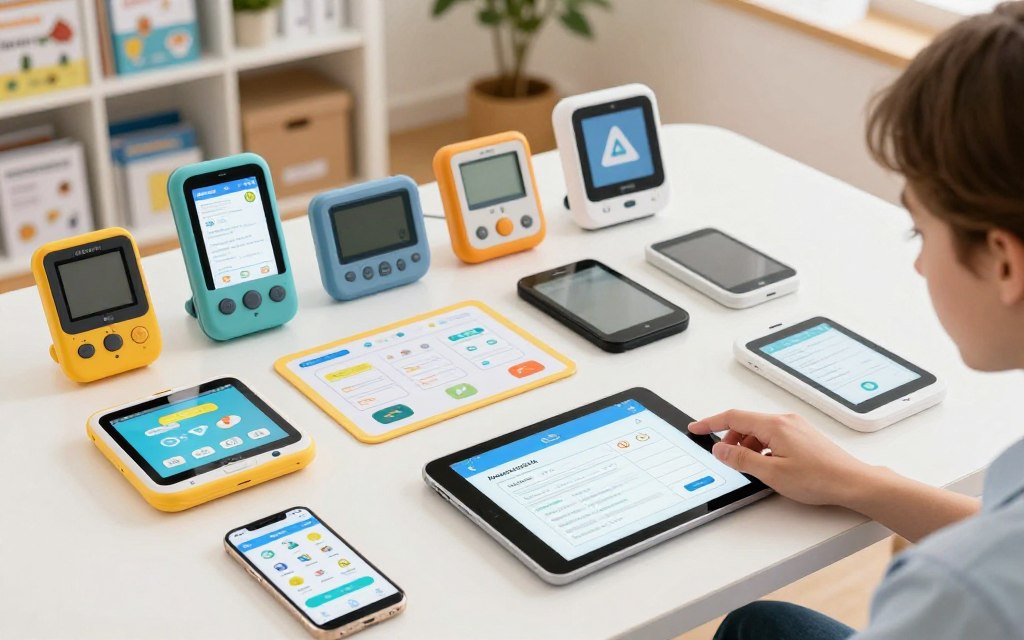
Understanding the main types of AAC devices helps users make informed choices. Exploring available options helps users find the right device combination for their communication needs. For further insights on how technology has transformed communication, check out this article on how technology has helped society.
Notable Augmentative Technology Products Worth Considering
Augmentative technology products come in several forms for different communication needs. Each product offers unique features and capabilities. An AAC device comparison can help users choose among the best AAC devices.
| Product Name | Intended Audience | Communication Method | Portability | Customization Options |
|---|---|---|---|---|
| Proloquo2Go | Children and adults with speech impairments | Symbol-based communication | Highly portable (iPad app) | Extensive vocabulary customization |
| TouchChat | Users with complex communication needs | Text and symbol communication | Portable (iOS and Android) | Customizable boards and vocabulary |
| GoTalk 20+ | Individuals with physical disabilities | Touch and record communication | Lightweight and portable | Limited customization |
Each product meets different needs and preferences. Proloquo2Go suits people who need symbol-based communication. TouchChat supports text and symbols, making it useful for many users.
When choosing among the best AAC devices, review these AAC device features:
- Individual assessment and access needs
- Vocabulary requirements
- Portability and durability
- Support and training requirements
- Funding eligibility and insurance coverage
Dedicated devices and apps may have different insurance coverage. A trial or demonstration can offer valuable insights before purchase. As one expert noted,
“The right AAC device can transform a person’s ability to communicate and connect with others.”
Learning about available augmentative technology products helps users make informed choices. For guidance on using these tools, visit this resource.
How Augmentative Technology Improves Quality of Life
Augmentative technology can improve AAC quality of life in daily activities. These tools support communication, greater independence, and better safety. When users express needs clearly, they gain more control over daily life.
In schools, augmentative technology supports learning and active student participation. This involvement builds key skills and promotes communication independence. At work, communication tools can create employment opportunities and help people show their talents.
Healthcare shows the benefits of augmentative communication. Users can share vital health details, including pain levels and allergies. This improves safety and helps people receive appropriate care.
Augmentative communication helps users start conversations, share stories, and stay connected with family and friends. These connections support social participation, belonging, and mental well-being.
Effective communication tools can reduce frustration caused by misunderstandings. Users can express emotions, preferences, and urgent needs clearly. They can then help make decisions about their lives, gaining agency and empowerment.
Communication partners also play an essential role. Patience, active listening, and acceptance of all communication modes can improve these tools’ effectiveness. These tools do not remove all barriers, but the right vocabulary, access methods, and support networks improve outcomes.
| Benefit | Description | Impact on Quality of Life |
|---|---|---|
| Independence | Ability to express needs and preferences | Greater control over daily activities |
| Education | Active participation in learning | Development of essential skills |
| Healthcare | Communication of health-related information | Improved safety and care |
| Relationships | Ability to maintain social connections | Enhanced sense of belonging |
Choosing the Right Augmentative Technology Solution
Choosing an augmentative technology solution begins with clear communication goals. First, identify what you or your loved one needs. This helps the device meet those needs in different environments.
When learning how to choose an AAC device, look beyond popularity or appearance. Language, cognition, literacy, vision, hearing, and motor access all matter. Consider each person’s situation to find the best fit.
An AAC assessment and assistive technology evaluation are critical steps. Qualified professionals should identify the user’s needs and preferences. Also explore AAC funding options to help purchase the needed technology.
Think about every environment where the device will be used. A clinic device may need changes for home, school, or outdoor use, so try it whenever possible. “What works in one setting may not work in another,” as the saying goes.
Remember, selecting an augmentative technology solution is not a one-time event; it is an ongoing process. Abilities, vocabulary, routines, and technology change over time. Regular evaluations and adjustments help the device meet evolving needs.
Emerging Trends and the Future of Augmentative Technology
As we look ahead, the future of AAC technology shows trends that improve communication, independence, and access. One major advance is the integration of AI in augmentative communication. This technology can predict words, organize vocabulary, and summarize communication patterns for smoother interactions.
Another exciting development is the rise of smart AAC devices. These devices offer personalized voice creation and multilingual support for diverse user needs. Wearable interfaces support seamless communication, while cloud-based configurations let users customize devices from anywhere.
These advances also bring challenges, including cost, device interoperability, and cybersecurity. AI can improve communication, but privacy, transparency, and user control must remain priorities. Users need confidence that their data stays protected and that they decide how the technology works.
Voice preservation and voice banking help people at risk of losing speech. They let users create digital voices that reflect their identities, while consent and data protection remain essential. Universal design can make mainstream devices more accessible and reduce the need for separate systems.
As we move forward, we should support communication autonomy, reliability, and dignity. The future of accessible technology innovation is bright, but inclusion and ongoing user support remain essential. By addressing these challenges, we can help everyone find tools for effective communication.
Conclusion
An augmentative technology guide covers many tools and methods that support people who struggle with speech. These assistive communication solutions range from simple gestures and communication boards to advanced speech-generating devices. Each tool improves communication access across different settings.
Choose an augmentative technology solution that fits the user’s abilities, goals, and preferences. Professional assessments and hands-on trials are vital. Custom vocabulary and training for communication partners can make AAC communication support more effective.
Reliable backup methods help ensure consistent communication. With careful planning, users can take part more fully in daily life, education, and work. Effective communication supports self-advocacy, stronger relationships, and a better quality of life.
Consult a qualified speech-language pathologist or assistive technology specialist. Choosing only by price or brand recognition may result in an unsuitable solution. The right tools can empower people, unlock potential, and improve connections with others.